Shopping Cart
There are no more items in your cart
What Is the Solemnity of the Holy Trinity?
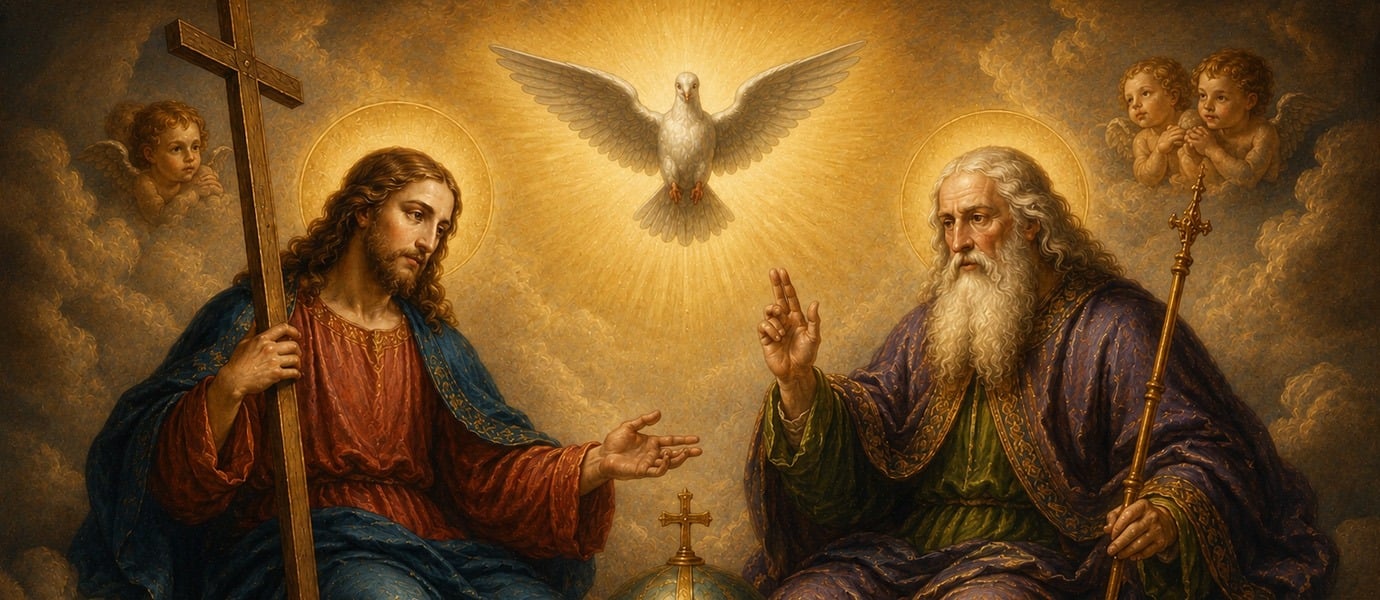
The Solemnity of the Holy Trinity, also known as Trinity Sunday, celebrates the mystery of one God existing eternally as three Persons: God the Father, God the Son, and God the Holy Spirit.
This doctrine is one of the foundations of Christianity and expresses the belief that the three Divine Persons are distinct, yet united in one divine essence.
The Church celebrates the Holy Trinity on the first Sunday after Pentecost, immediately following the conclusion of the Easter season. This placement in the liturgical calendar is deeply meaningful because Pentecost commemorates the descent of the Holy Spirit upon the Apostles, completing the revelation of the Trinity in salvation history.
Why Is the Holy Trinity Important in the Catholic Faith?
The mystery of the Holy Trinity is central to Catholic theology and spiritual life. Every sacrament, prayer, and liturgical celebration is rooted in the life of the Trinity.
Catholics are baptized “in the name of the Father, and of the Son, and of the Holy Spirit,” and the Sign of the Cross itself is a daily reminder of this mystery.
A Mystery of Divine Love
The Holy Trinity reveals that God is not solitude, but eternal communion and perfect love. The relationship between the Father, Son, and Holy Spirit reflects complete unity, self-giving, and harmony.
For Catholics, this becomes a model for human relationships, family life, and the unity of the Church.
The Center of Christian Worship
The Mass, prayers, blessings, and liturgical celebrations constantly reference the Trinity. Nearly every Catholic prayer begins or ends with an invocation to the Father, Son, and Holy Spirit.
The doxology proclaimed during the Eucharist is one of the clearest examples of Trinitarian worship within the liturgy.
Why Is Trinity Sunday Celebrated After Pentecost?
The timing of Trinity Sunday has profound symbolic meaning. During the liturgical year, the Church gradually reveals the mystery of salvation:
- Advent and Christmas focus on the coming of Christ.
- Lent and Easter celebrate His Passion, Death, and Resurrection.
- Pentecost commemorates the coming of the Holy Spirit.
Only after these events does the Church dedicate a special solemnity to contemplating the fullness of God revealed as Father, Son, and Holy Spirit.
This sequence helps the faithful understand how the Trinity is present throughout the entire story of salvation.
Symbols Associated with the Holy Trinity
Throughout Christian history, various symbols have been used to represent the Holy Trinity and help explain this profound mystery.
The Triangle
One of the most common symbols is the triangle, representing the unity of the three Divine Persons in one God.
The Shamrock
According to tradition, Saint Patrick used the shamrock to explain the Trinity: three leaves united in one plant.
The Trinity Shield
Also known as the “Scutum Fidei,” this medieval Christian symbol visually illustrates the relationship between the Father, Son, and Holy Spirit while affirming that each Person is fully God.
How Catholics Celebrate Trinity Sunday
Catholics around the world celebrate Trinity Sunday through Mass, prayer, Eucharistic adoration, and reflection on the mystery of God’s nature.
Churches often highlight Trinitarian prayers and hymns during the liturgy, while many believers take time to meditate on the meaning of divine communion and unity.
The solemnity also encourages Catholics to deepen their understanding of the Creed and the foundations of Christian belief.
The Holy Trinity at the Heart of Catholic Life
The Solemnity of the Holy Trinity is a celebration of the deepest mystery of the Christian faith: one God in three Divine Persons. Celebrated on the first Sunday after Pentecost, it reminds Catholics that the Father, the Son, and the Holy Spirit are inseparably united in eternal love.
More than a theological concept, the Holy Trinity stands at the center of Catholic prayer, worship, and spiritual life, inviting believers to live in communion with God and with one another.